
Step-by-Step Guide to Sewer Line Inspection
- Admiral Plumbing Heating & Cooling

- Jun 3
- 8 min read
What a Sewer Line Inspection Is — and Why It Matters
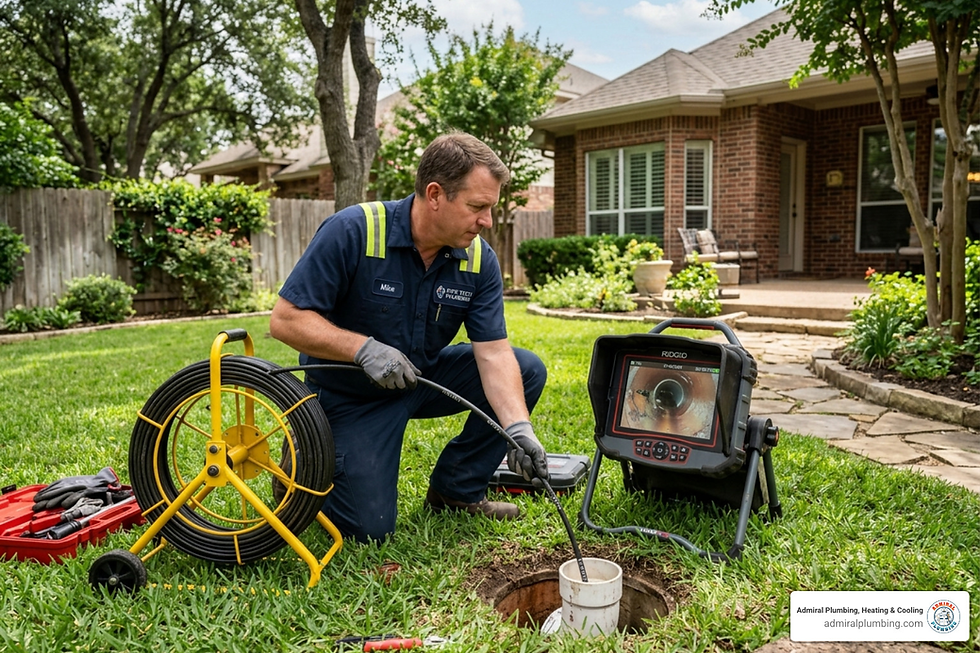
A sewer line inspection is a diagnostic service where a licensed plumber inserts a waterproof, high-definition camera into your home's main sewer pipe to check for damage, blockages, and other hidden problems — without any digging.
Here's what you need to know at a glance:
What it is: A camera on a flexible rod is fed through your sewer line to show its interior condition in real time
What it finds: Tree root intrusion, cracked or collapsed pipes, grease buildup, pipe sags ("bellies"), and offset joints
What it costs: Typically $250–$500 — a fraction of the average $2,556 sewer repair bill
How long it takes: Usually 15 to 60 minutes for a residential line
When you need one: Before buying a home, when drains are slow, when you notice foul odors, or as routine maintenance every 2–3 years
Your home's sewer line runs underground, completely out of sight. Most standard home inspections never look inside it. That means serious problems — cracked clay pipes, root intrusion, a sagging line — can go undetected for years, quietly getting worse until you're facing a repair bill that can reach $25,000 or more.
Think of a sewer camera inspection like an MRI for your pipes. Instead of guessing what's wrong, a technician can see exactly what's happening inside the line and pinpoint the problem to within inches.
I'm Adam Wettach, owner of Admiral Plumbing, and I've seen how a timely sewer line inspection can save Utah County homeowners thousands of dollars by catching small issues before they become emergencies. Whether you're buying a home or dealing with recurring drain problems, this guide walks you through everything you need to know.

What is a Sewer Line Inspection?
At its core, a Sewer Camera Inspection is the most effective way to eliminate the guesswork involved in underground plumbing. In the past, if a sewer line was backed up, plumbers often had to dig up the yard just to see where the problem was. Today, we use advanced borescope technology to travel through the pipes non-invasively.

The equipment consists of a high-definition video camera mounted on a flexible fiber-optic cable. These cameras are specifically designed to be waterproof and rugged enough to navigate the "lateral sewer line"—the section of pipe that connects your home to the municipal main or a septic tank.
As we push the camera through the pipe, powerful LED lights on the camera head illuminate the interior walls. The camera transmits a live feed to a high-resolution monitor, allowing us to perform real-time monitoring of every inch of the pipe. This allows us to see exactly what is causing a clog or where a pipe has structural damage. It is a completely non-destructive diagnostic tool; we don’t have to tear up your flooring or your lawn just to get a clear picture of your plumbing health.
The Step-by-Step Process of a Sewer Camera Inspection
While the technology is high-tech, the actual process is straightforward when performed by a professional. When we arrive for a Sewer Inspection or a Main Sewer Inspection, we follow a specific protocol to ensure we see the entire line from the house all the way to the city tap.
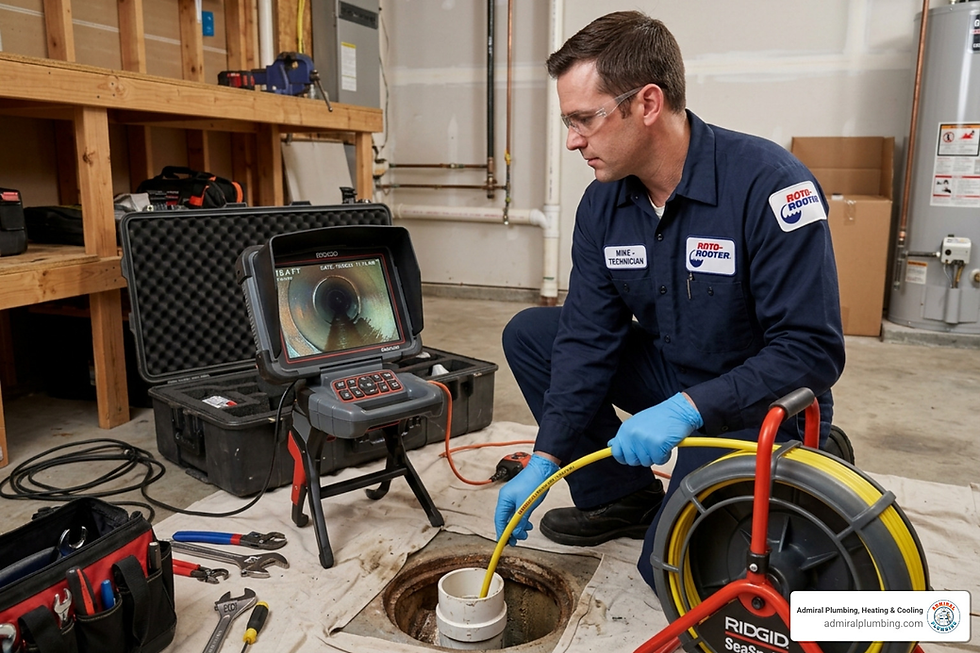
Preparing the Access Point
The first step is finding a way into the system. Most modern homes have a "cleanout," which is a capped pipe located in the yard, basement, or crawl space that provides direct access to the main sewer line.
However, in some older Northern Utah homes, a cleanout might be buried or non-existent. In these cases, our Residential Sewer Inspection team might need to access the line through a roof vent or by temporarily removing a toilet to use the closet flange as an entry point. We always take care to protect your home by using drop cloths and ensuring the work area remains clean.
Camera Insertion and Navigation
Once the access point is ready, we insert the camera. The camera is attached to flexible rods that are rigid enough to be pushed long distances (often up to 100 feet or more) but flexible enough to navigate the bends and elbows in your plumbing.
As the camera travels, a footage counter on the monitor tracks exactly how many feet of cable have been deployed. This is critical for Commercial Sewer Inspection and residential jobs alike, as it tells us exactly how far away a defect is from the entry point. During this phase, we may run water through the pipes. This helps "float" the camera head and lubricates the path, allowing for a smoother, clearer video feed.
Locating Defects with Sonde Technology
One of the most impressive parts of modern inspection is the "Sonde." This is a radio transmitter located inside the camera head. If we spot a collapsed pipe or a major root intrusion, we don't just say, "It's about 40 feet out."
We use a handheld signal receiver on the surface to pick up the radio frequency from the Sonde. This allows us to perform "depth mapping" and pinpoint the exact underground location of the defect. We can literally mark the grass with a spot of paint, showing exactly where a repair is needed. This precision leads to targeted repairs, which are much cheaper than digging up the entire line.
Common Defects Found in a Sewer Line Inspection
Knowing what to look for is just as important as having the camera. Different pipe materials face different risks. For example, homes built before 1984 often have clay pipes, which are notorious for being easily crushed or invaded by roots.
Pipe Material | Average Lifespan | Common Issues |
Clay | 50-60 Years | Root intrusion at joints, cracking, crushing |
Cast Iron | 40-60 Years | Internal corrosion, scaling, pinhole leaks |
PVC (Plastic) | 100+ Years | Bellies (sags), joint separation, construction debris |
If you notice any of the Top 5 Signs Your Sewer Line Needs Repair, an inspection is the only way to confirm the culprit. Understanding Sewer Drain Issues: When to Call the Experts helps you stay ahead of total system failure.
Identifying Structural Failures
The camera is excellent at spotting structural problems that have developed over decades. We often find:
Tree Root Intrusion: Roots are attracted to the moisture and nutrients in sewer lines. They can grow through tiny cracks or gaps in pipe joints, eventually filling the pipe and causing total blockages.
Offset Joints: Over time, soil movement (often from heavy Utah snowmelt or rain) can cause pipe sections to shift, creating a "lip" that catches debris.
Pipe Bellies: This is a sag in the line where water and waste pool. Because sewer lines rely on gravity, a belly can cause chronic clogs.
Corrosion and Scale: In cast iron pipes, the interior can become "scaled" or rusted, narrowing the passage and snagging toilet paper.
The Importance of Sewer Camera Inspections for Home Plumbing Maintenance cannot be overstated—catching an offset joint early can prevent a full-blown collapse.
Detecting Obstructions and Buildup
Not every problem is structural; sometimes the issue is what's being put down the drain. We frequently find:
Grease Accumulation: Over time, cooking fats poured down the sink solidify into a rock-hard substance.
"Flushable" Wipes: Despite the marketing, these wipes do not break down like toilet paper and are a primary cause of residential backups.
Construction Debris: In newer homes, we sometimes find grout, wood scraps, or even tools left in the lines by contractors.
When and Why You Should Schedule an Inspection
You shouldn't wait for a sewage backup to think about your pipes. There are several key moments when an inspection is a vital protective measure.
Buying an Older Home
If you are in the "due diligence" phase of buying a home in Provo or the surrounding areas, a sewer scope is one of the smartest investments you can make. The Importance of Home Sewer Inspections is a major topic for savvy buyers.
Since cast iron and clay pipes have a life expectancy of roughly 40 to 60 years, many homes built in the mid-20th century are reaching the end of their plumbing’s lifespan. Discovering a $15,000 sewer problem before you close the deal gives you the power to negotiate repairs with the seller. The Hidden Lifeline: Why Checking Your Sewer Line is Essential for Homeowners explains how this one checkup protects your biggest investment.
Warning Signs of Sewer Failure
If you aren't moving, watch for these "cries for help" from your plumbing:
Slow Drains: If all the drains in your house are sluggish, the problem is likely in the main line, not a single sink.
Sewage Odors: A healthy system should be airtight. If you smell "rotten eggs" in the yard or basement, there is likely a crack or break.
Lush Grass: Is one patch of your lawn greener and faster-growing than the rest? Sewage acts as a fertilizer, and a leaking pipe might be feeding that grass.
Rodent Activity: Rats and other pests can use breaks in sewer lines as a highway into your home.
Gurgling Toilets: If your toilet bubbles when you run the shower or sink, air is being trapped by a blockage in the sewer line.
Frequently Asked Questions about Sewer Line Inspection
How Much Does a Sewer Line Inspection Cost?
On average, a professional sewer line inspection costs between $250 and $500. While this might seem like an extra expense, consider the alternative. The average cost of a sewer repair is over $2,500, and a full replacement can exceed $25,000. Spending a few hundred dollars to catch a problem early—or to avoid buying a home with a failing system—is a massive net saving. If you are looking for a Sewer Camera Service Near Me, we provide transparent, upfront pricing.
How Long Does a Sewer Line Inspection Typically Take?
For a standard residential property, the process usually takes between 15 and 60 minutes. The timeframe depends on how easily we can access the cleanout and the length of the pipe. If the line is heavily clogged with roots or debris, it may take a bit longer to navigate the camera safely to the city connection.
Can I Perform a DIY Sewer Camera Inspection?
While you can rent "drain cameras" from some big-box stores, we generally advise against it. Professional-grade camera systems cost between $5,000 and $10,000. The rental versions often lack the high-definition resolution needed to see hairline cracks, and they rarely include "Sonde" technology to locate the camera from the surface.
Furthermore, interpreting the footage requires technical expertise. A professional plumber knows the difference between a minor "burr" in a pipe and a structural crack that is about to fail. Without that experience, you might miss a serious issue or misdiagnose a simple clog as a broken pipe.

Conclusion
A sewer line inspection is no longer a luxury—it is an essential part of responsible homeownership and smart home buying. By using non-invasive camera technology, we can see through the dirt and concrete to give you a clear, honest assessment of your home's most critical infrastructure.
At Admiral Plumbing, Heating & Cooling, we take pride in serving our Northern Utah neighbors with the best diagnostic tools available. Whether you are dealing with a midnight backup or just want peace of mind before signing a mortgage, our team is here to help. We are proud of our A+ BBB rating and our commitment to 24/7 emergency service.
Don't leave your underground pipes to chance. If you're looking for a Sewer Camera Service Near Me, give us a call today. Schedule your professional sewer line inspection today! and let us help you keep your home's "hidden lifeline" in perfect working order.


Comments