
How to Fix a Sewer Backup Quickly and Easily

Updated: Oct 9
What to Do When Sewer Backups Enter Your Home

Sewer backups happen when wastewater cannot move through a drain or sewer pipe and comes back up through a floor drain, toilet, tub, or sink.
Treat it as an urgent health and property-risk issue: stop using water, keep people and pets away from the area, and call a licensed plumber or your local utility to find out whether the blockage is in your private line or the public sewer main.
If this is happening now | Do this first |
Sewage is rising from a drain or fixture | Stop flushing, running faucets, using the washer, and using the dishwasher. |
Water is near outlets, cords, or electrical equipment | Stay out of the water and shut off power only if you can do so safely. |
Several neighbors have the same problem or sewage enters quickly | Report it to your city or sewer utility right away. |
The issue appears limited to your home | Call a licensed plumber for diagnosis and drain clearing. |
A backup can be caused by tree roots, grease, wipes, damaged pipes, or an overloaded city main during heavy rain. The right response in the first few minutes can limit damage to your basement, belongings, and home systems.
I am Adam Wettach, owner of Admiral Plumbing, Heating & Cooling, and I have years of hands-on residential plumbing experience diagnosing drain clogs, sewer-line issues, and urgent sewer backups. Below, I will explain what causes them, what to do safely, and how to reduce the chance of another overflow.

Understanding What Causes Sewer Backups and Line Responsibilities
To resolve a sewer line emergency, you first need to understand how your home's plumbing connects to the public system. Every home has a dedicated sewer lateral—the underground pipe that collects wastewater from toilets, sinks, and drains and carries it out to the municipal main running under the street.
Across the United States, there are over 500,000 miles of public sewer lines, and on average, these systems are over 30 years old. Due to aging infrastructure and shifting environmental conditions, sewer backups across the nation are rising by roughly 3 percent every year.
When raw wastewater backs up, knowing where your private responsibility ends and where city responsibility begins saves critical time.
In almost all jurisdictions throughout Northern Utah and nationwide, the property owner owns and is responsible for maintaining the entire private sewer lateral line up to the connection at the public sewer main—even the portion that runs beneath the sidewalk and public right-of-way.
Aspect | Private Sewer Lateral | Public Sewer Main |
Definition | The pipe extending from the house foundation to the municipal sewer main | The large collector pipe operated by the local city or utility district |
Location | Extends under private lawn, driveway, sidewalk, and street right-of-way | Located under public roads and municipal easements |
Maintenance Responsibility | Property owner is 100% responsible for repairs, cleaning, and replacement | City or sanitation district handles routine cleaning and structural repairs |
Common Failure Causes | Tree root invasion, grease buildup, flushed wipes, pipe sagging or collapse | Stormwater overload during torrential rain, main line blockages, aging infrastructure |
Action Required During Backup | Call a licensed local plumber to inspect and clear private lateral blockages | Contact local city public works or sanitation district immediately |
Common Causes of Sewer Backups
Understanding the root cause of a blockage allows us to select the most effective tool to clear it. In our experience servicing residential plumbing systems across Northern Utah, five main culprits account for nearly all sewer overflows:
Tree Root Intrusion
Tree roots naturally seek out moisture and nutrients. They penetrate hairline cracks or open joints in older clay or cast-iron pipes. Once inside, roots grow rapidly, trapping solid waste and completely blocking flow.
Fats, Oils, and Grease (FOG)
Pouring warm cooking oil or grease down the kitchen sink seems harmless, but as it cools, grease coats the inner walls of the sewer pipe. Over time, FOG thickens into hardened obstructions—sometimes forming massive fatbergs when combined with flushed debris.
Flushable Wipes and Foreign Objects
Despite marketing claims, "flushable" wipes do not break down like toilet paper. They remain intact, catch on pipe imperfections or root strands, and create dense physical blockages. Paper towels, hygiene products, and wipes belong in the trash.
Pipe Deterioration and Bellies
Over decades, soil shifting and ground settlement cause pipes to crack, collapse, or form sagging sections known as "bellies." Water accumulates in these low spots, causing solids to settle and choke off flow.
Stormwater Infiltration and Main Overloading
Heavy rainfall or snowmelt can enter aging sanitary sewer lines through cracks or illegal connections (such as roof downspouts or sump pumps), overwhelming the public main and forcing wastewater back up into low-lying basements.
To pinpoint exact failure points without digging up your yard, our technicians perform a high-definition main sewer camera inspection. A flexible fiber-optic camera is guided through your line, allowing us to inspect pipe walls in real time and locate blockages with pinpoint accuracy.
Determining Lateral Ownership and Municipal Boundaries
Because property owners are financially responsible for their side sewers, determining line ownership early is essential. When sewage begins to overflow into your basement or lower-level drains, check whether your neighbors are experiencing similar issues.
If multiple homes on your street have backed-up drains simultaneously, or if sewage is overflowing from street manholes, the problem is likely located in the municipal main line. In these cases, you should contact your local public works or municipal utility department immediately.
Many large cities maintain dedicated administrative portals, such as the NYC DEP Sewer Backup Guide, detailing how city teams dispatch emergency crews to inspect public mains within specific service windows.
However, if the backup is isolated strictly to your house fixtures, the obstruction resides inside your private lateral line, and a private plumbing company must be called to handle the repair.
Immediate Action Steps During an Emergency Sewage Overflow
When sewage overflows into your home, immediate, organized action is critical to protect your household from severe health hazards and minimize property loss.

Stop Water Usage Immediately: Turn off all taps, stop washing machines and dishwashers, and instruct everyone in the household not to flush any toilets.
Assess Electrical Hazards: Raw sewage is an electrical conductor. If water touches electrical outlets, appliance cords, or your breaker panel, do not step into the water. Shut off power at the main breaker only if you can safely reach it without entering flooded areas.
Evacuate Vulnerable Persons: Keep children, pets, and immunocompromised individuals away from affected areas. Raw wastewater contains harmful bacteria, viruses, and biological hazards.
Notify the Right Emergency Responder: If the backup affects multiple homes, call public works. If isolated to your home, contact a qualified emergency plumbing service immediately.

Emergency Containment Practices
While waiting for professional assistance, take practical steps to contain the damage without risking your personal health. Never attempt to unclog a main sewer line using chemical drain cleaners; these harsh acids generate heat, emit toxic fumes, and rarely clear severe main-line blockages.
Put on full personal protective equipment (PPE)—including heavy rubber boots, thick waterproof gloves, eye protection, and a mask—before entering the room.
If possible, close doors leading to contaminated spaces to limit air circulation and stop foul sewer gas from spreading through your HVAC ductwork. For further regional emergency guidelines on lateral management, consult resources like the Seattle Side Sewer Backup Instructions.
When to Call a Plumber vs. Municipal Utilities
Knowing who to call first saves valuable time during an emergency:
Call Local Public Works or Utility District First If
Sewage is rapidly bubbling up from multiple drains across your neighborhood, street manholes are overflowing, or your neighbors confirm their basements are also backing up. Municipal public works departments operate emergency dispatch teams to inspect city mains.
Call a Plumber First If
The backup is contained entirely within your home, lower-level fixtures (like basement showers or floor drains) overflow when you run water upstairs, or water slowly seeps back up through a single cleanout.
At Admiral Plumbing, Heating & Cooling, our team offers 24/7 emergency sewage backup services throughout Northern Utah. We respond quickly with industrial drain augers, hydro-jetting equipment, and sewer cameras to diagnose and restore your plumbing system immediately.
Safe Biohazard Remediation and Disinfection Protocols
Raw sewage is classified as Category 3 "black water," meaning it contains dangerous pathogens, including E. coli, Salmonella, Hepatitis A, and parasitic organisms. Immediate biohazard containment and proper sanitation are essential to keep your family safe.
DIY Surface Disinfection Guidelines
If you choose to tackle small, minor spillages on hard, non-porous surfaces (such as sealed concrete basement floors or tile), follow strict sanitation protocols to ensure full decontamination. Comprehensive guidelines stress that thorough cleaning must precede chemical disinfection.
Remove Standing Wastewater
Use a dedicated wet/dry shop vacuum equipped with a HEPA filter to collect liquid sewage.
Scrub with Heavy-Duty Detergent
Wash down all affected hard floors, walls, and fixtures using hot water and an antibacterial detergent solution to strip away solid dirt and organic matter. Allow surfaces to dry completely.
Apply Disinfectant Solution
Mix a solution of 1/4 cup liquid household bleach per 1 gallon of cool water (or approximately 8 tablespoons per gallon). Alternatively, a 1:10 bleach-to-water ratio can be used for heavy contamination.
Maintain Wet Contact Time
Spray or mop the bleach solution onto non-porous surfaces and keep them wet for at least 10 minutes to eliminate remaining pathogens.
Ensure Adequate Ventilation
Open windows and position air movers or fans pointing outward to exhaust toxic fumes and humidity. Never mix bleach with ammonia or acid-based cleaners, as this releases deadly chloramine gas.
Restoring Contaminated Structural Materials
Porous materials absorb biological contaminants deep into their fibers, making complete disinfection practically impossible. To prevent severe indoor air pollution and dangerous mold outbreaks, follow strict restoration timelines adhering to Institute of Inspection Cleaning and Restoration Certification (IICRC) standards:
Carpet and Padding: Wall-to-wall carpeting and underlying foam padding exposed to Category 3 sewage must be cut out, bagged, and safely discarded.
Drywall and Insulation: Cut out contaminated drywall and paneling at least 12 to 24 inches above the highest visible water stain. Remove soaked fiberglass or cellulose insulation behind the wallboard.
Upholstered Furniture and Books: Discard any porous furniture, mattresses, cardboard boxes, and paper goods that came into direct contact with raw wastewater.
The 24-Hour Rule: Structural drying and biohazard extraction must be completed within 24 to 48 hours of exposure. Beyond this window, dangerous mold spores begin colony growth on damp drywall and wood framing.
How to Prevent Sewer Backups with Maintenance and Upgrades
Preventing a sewer backup is significantly cheaper and easier than cleaning up after a flooded basement. Implementing proactive plumbing maintenance and drain safety habits keeps your sewer lateral flowing freely year-round.
Long-Term Upgrades to Stop Sewer Backups
If your home sits in a low-lying area, has an older plumbing system, or has experienced past drain backups, upgrading your plumbing infrastructure offers long-term protection:
Install a Backwater Prevention Valve
A backwater valve is a mechanical fixture installed on your main sewer line. It allows wastewater to flow out toward the municipal main but automatically seals shut if sewage flows backward toward your house.
Schedule Routine Hydro Jetting
High-pressure main sewer hydro jetting uses pressurized water streams (up to 4,000 PSI) to blast away grease buildup, scale, and tree roots, restoring the full inside diameter of your pipe.
Trenchless Sewer Pipe Lining
If your lateral line suffers from cracks or minor root intrusion, trenchless CIPP (Cured-In-Place Pipe) lining inserts an epoxy-saturated sleeve inside your existing pipe, creating a jointless, root-proof pipe wall without destroying your landscape.
Disconnect Stormwater Connections
Ensure roof downspouts, French drains, and basement sump pumps are disconnected from your sanitary sewer line. Directing clean rainwater into your sanitary drain overloads your lateral line and violates local building codes.
For detailed preventative advice, read our comprehensive how to prevent sewer backups guide.
Proper Drain Usage Guidelines
Protecting your plumbing requires adopting the standard Four Ps rule: the only items that should ever be flushed down a toilet are Poop, Pee, Puke, and Paper (toilet paper).
To safeguard your home's drain system, keep these common items out of your toilets and sinks:
Hygienic wipes, baby wipes, and "flushable" wipes
Paper towels, facial tissues, and cloth napkins
Feminine hygiene products, applicators, and wipes
Cloth or disposable diapers
Dental floss and cotton swabs
Cooking oils, butter, bacon grease, and salad dressings
Coffee grounds, eggshells, and food scraps
Paint, solvents, motor oil, and harsh chemical cleaners
Collect cooled cooking grease in a sealed container and throw it in the garbage. A few small habits keep your private lateral clean and free-flowing.
Navigating Insurance Claims and Liability for Sewer Damage
Dealing with property damage from a sewage backup can be stressful. Navigating insurance claims quickly ensures you receive fair financial compensation for repairs and restoration.
Documenting Sewage Backup Damage
Standard homeowners insurance policies generally exclude water damage caused by sewer or drain backups unless you have added a specific rider or endorsement to your policy. Check your insurance documents or contact your insurance agent to ensure you carry optional sewer backup coverage before an incident occurs.
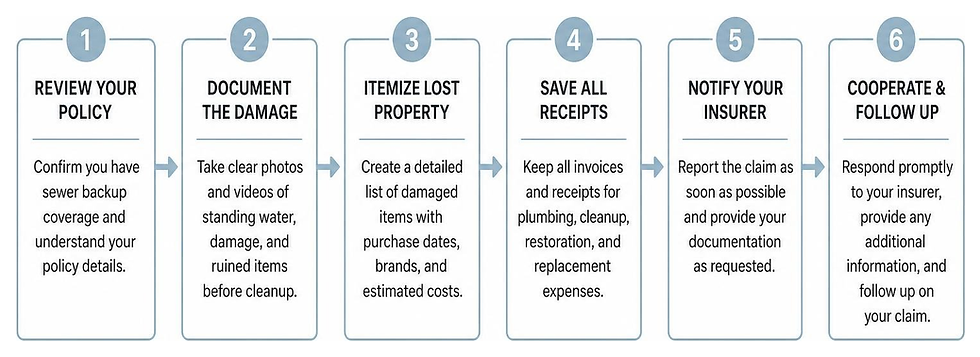
If a sewer backup occurs in your home, take these steps to support your claim:
Take Baseline and Post-Incident Photos
Maintain an updated home inventory with photos of your basement and belongings before an issue occurs. During a backup, take clear photos and videos of the standing water level, structural damage, and ruined items before starting cleanup.
Itemize Lost Property
Create a detailed spreadsheet listing damaged items, including estimated purchase dates, brand names, and replacement costs.
Save All Service Receipts
Keep every invoice, receipt, and work order from plumbers, emergency cleanup crews, restoration companies, and replacement equipment rentals.
Know Municipal Claim Deadlines
If you believe a backup was caused by municipal sewer main negligence, many cities require formal notice within strict timeframes—often within 90 days of the incident. Guidelines such as the Portland Sewer Backup Emergency Guidelines explain local municipal liability claim procedures and city-backed backflow prevention grant programs.
Frequently Asked Questions About Sewer Backups
What is the primary cause of residential sewer backups?
The single most common cause of residential sewer backups is tree root intrusion into aging private sewer lateral pipes, closely followed by accumulated grease (FOG) and flushed paper products like wet wipes.
Roots seek out moisture in tiny pipe cracks, trap debris passing through, and eventually block wastewater flow entirely.
Does standard homeowners insurance cover sewer backups?
No, standard homeowners insurance policies typically do not cover water or sewage damage that backs up through sewers or drains.
Homeowners must purchase a specific optional insurance endorsement—often called a "Sewer and Drain Backup Rider"—which provides coverage for structural cleanup, professional biohazard remediation, and personal property replacement.
How does a backwater prevention valve protect a home?
A backwater prevention valve is installed directly into your main sewer lateral line, typically beneath the basement floor. It features a flapper that opens outward to let wastewater exit your home under normal gravity flow.
If high pressure or main line surcharges force wastewater backward into your lateral line, the flapper closes shut, blocking sewage from entering your home.
Conclusion
A sewer backup is one of the most urgent and unpleasant plumbing emergencies a homeowner can face. Acting quickly—stopping water use, prioritizing electrical safety, calling for professional plumbing repairs, and following biohazard cleanup procedures—will help minimize property damage and protect your family's health.
When drain trouble strikes your home in Northern Utah, don't face the stress alone. The experienced team at Admiral Plumbing, Heating & Cooling is ready to assist with 24/7 emergency response, expert video camera drain diagnostics, hydro-jetting, and comprehensive sewage backup repair services.


Comments