
How to Clean a Grease Trap Sewer Line Like a Pro
- Admiral Plumbing Heating & Cooling

- Jul 30
- 10 min read
Why Grease Trap Sewer Cleaning Matters for Your Home and Business

Grease trap sewer cleaning is one of the most overlooked — and most costly — maintenance tasks for any kitchen that handles cooking oil, food scraps, or heavy dishwashing. Here's what you need to know right away:
Quick answer: How do you clean a grease trap sewer line?
Run cold water through the sink for a few minutes to solidify the grease layer
Put on rubber gloves, safety goggles, and a nose mask
Remove the trap cover carefully without damaging the gasket
Scoop out the floating grease mat into an airtight container
Vacuum or bucket out remaining liquid and bottom solids
Scrape the interior walls and baffles with a plastic scraper
Wipe the interior clean with rags or paper towels
Seal the grease waste with a solidifying agent (like kitty litter) before disposal
Reinstall baffles and secure the lid tightly
When grease traps are neglected, fats, oils, and grease (FOG) escape into sewer lines. There, they cool, harden, and combine with other waste to form massive blockages — sometimes called fatbergs — that can shut down an entire kitchen or trigger expensive municipal fines starting at $300 per day.
The good news? Regular cleaning prevents almost all of it.
I'm Adam Wettach, owner of Admiral Plumbing, and I've spent years diagnosing and clearing the kind of sewer backups and drain failures that proper grease trap sewer cleaning prevents in the first place. In this guide, I'll walk you through everything — from how grease traps work to when it's time to call a pro.
Understanding Grease Trap Sewer Cleaning and How Interceptors Work
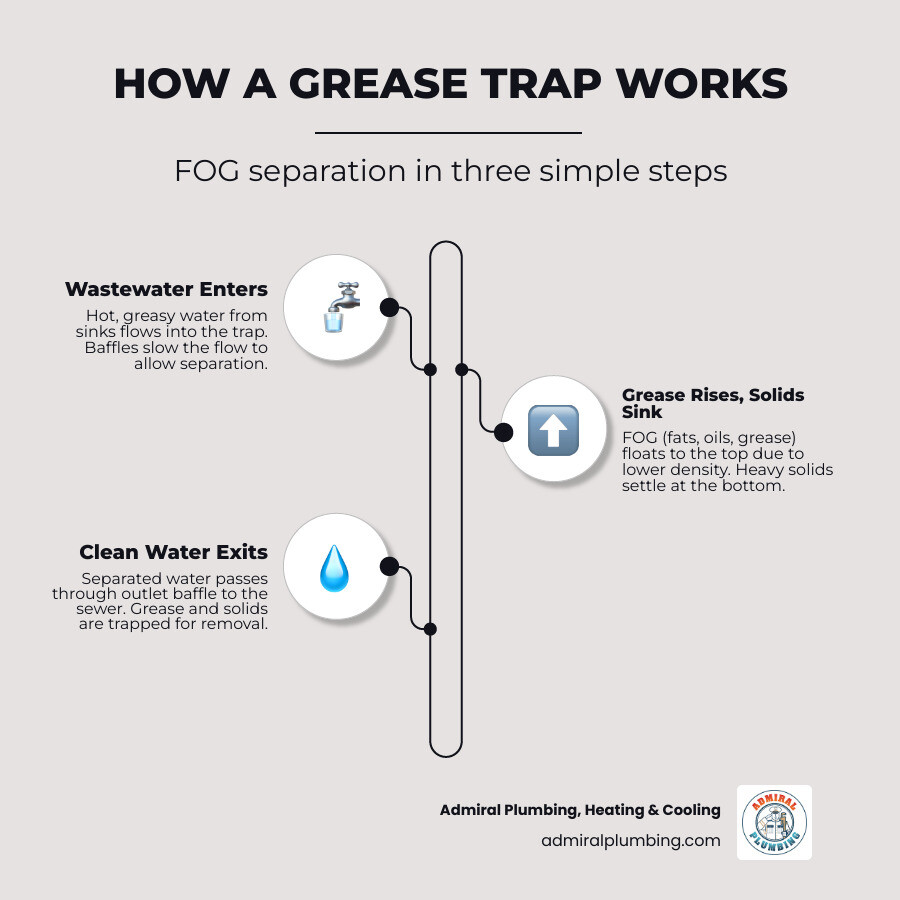
To understand why grease trap sewer cleaning is so critical, we have to look at what happens inside the trap. A grease trap (or hydromechanical grease interceptor) is essentially a plumbing speed bump. Its primary job is to slow down wastewater coming from your kitchen sinks so that grease has time to separate from the water before it reaches the municipal sewer.
The Science of FOG Separation
The entire system relies on a simple physical principle: density. Fats, oils, and grease (FOG) are approximately 10 to 15 percent less dense than water. Because they are lighter, they naturally want to float to the surface.
When warm, greasy water drains from your commercial sink, it passes through a flow control device that regulates its speed. As the wastewater enters the main chamber of the trap, its flow slows down dramatically. This quiet environment allows the physics of gravity separation to take over:
The Floating Layer: The lighter FOG rises to the top, forming a thick, semi-solid grease mat.
The Bottom Layer: Heavy food particles and organic solids sink to the bottom, forming a layer of sludge.
The Middle Layer: Relatively clean water remains sandwiched in the middle.
Baffles (internal dividing walls) physically block the floating grease and bottom solids from leaving the tank. The clean water from the middle layer is pushed under the final baffle and escapes through the outlet pipe directly into the sanitary sewer system.
Why Regular Grease Trap Sewer Cleaning Prevents Sewer Backups
If you do not regularly clean out this trapped waste, the grease mat on top grows thicker, and the sludge on the bottom grows deeper. Eventually, the space available for water shrinks so much that wastewater rushes through the trap too quickly. Without enough time to cool and separate, hot liquid grease escapes directly into the outlet pipe.
Once inside the cooler environment of the main sewer line, this grease solidifies. It acts like glue, trapping food debris, wet wipes, and other waste. Over time, this mixture hardens into a "fatberg" — a rock-solid mass that completely obstructs the pipe. The result is a catastrophic sewage backup. To protect your commercial property from these disasters, we highly recommend keeping up with proactive Commercial Sewer Maintenance to keep your main lines completely clear.
The Dos and Don'ts of Grease Trap Maintenance
Maintaining a grease trap is as much about what you do in the kitchen as what you do inside the tank. Training your staff on proper kitchen best practices is your first line of defense against plumbing disasters.
Safe Maintenance Practices (Dos) | Unsafe Maintenance Practices (Don'ts) |
Do scrape all plates and cookware into the trash before washing. | Don't use chemical solvents, bleach, or enzymes to dissolve grease. |
Do separate yellow grease (fryer oil) from brown grease (trap waste). | Don't pour boiling water down sinks connected to the grease trap. |
Do keep a detailed log of all maintenance and cleanings. | Don't connect toilets or bathroom fixtures to the grease trap. |
Do clean the trap before it reaches 25% total capacity. | Don't ignore foul odors or slow-draining kitchen sinks. |
What to Avoid: Solvents and Boiling Water
One of the most common mistakes kitchen managers make is trying to clear grease using quick chemical fixes. Pouring chemical solvents, bleach, or heavy degreasers down the drain might seem like an easy way to dissolve a clog, but it actually ruins your system. These harsh chemicals destroy the beneficial, natural enzymes and bacteria in the trap that help break down organic waste.
Even worse, chemical emulsifiers only liquefy the grease temporarily. As soon as the mixture travels downstream and dilutes, the grease separates from the chemicals, solidifies, and clogs the sewer line further down.
Pouring boiling water down a trap-connected sink causes a similar disaster. The extreme heat melts the grease mat inside the trap, allowing the liquefied FOG to bypass the baffles and escape into the sewer. As the water cools down in the underground sewer line, the grease hardens again, creating massive blockages downstream.
Best Practices for Food Solid Disposal
The best way to manage grease is to prevent it from entering your plumbing in the first place.
Scrape Plates Thoroughly: Make sure kitchen staff scrape all food scraps, sauces, and residual grease directly into the trash or compost bins before rinsing plates in the sink.
Use Sink Strainers: Place fine-mesh strainers over all sink drains to catch stray food solids.
Understand Your Grease Types: Keep "yellow grease" (clean, used cooking oil from deep fryers) completely separate from "brown grease" (the messy, water-laden FOG recovered from your grease trap). Yellow grease should be stored in dedicated recycling bins to be collected by a licensed recycler, while brown grease must be carefully disposed of in accordance with local environmental rules.
How to Clean an Under-Sink Grease Trap: A Step-by-Step Guide
Small, indoor hydromechanical grease interceptors installed directly under kitchen sinks can often be cleaned manually if you have the right equipment and don't mind a bit of hard work.
Before you begin, keeping your kitchen lines clear is a multi-step process. For a deeper look at keeping your drains running smoothly, check out our guide on Drain Cleaning: What Works Best for Your Home and Business.
Essential Tools and Safety Equipment
Do not underestimate the odor of an opened grease trap. Decomposing organic matter releases hydrogen sulfide gas, which smells like rotten eggs and can cause nausea or headaches. Before starting, gather the following safety gear and tools:
Personal Protective Equipment (PPE): Heavy-duty rubber gloves, safety goggles, and a nose mask or respirator.
Protection: Old newspapers, rags, or a plastic tarp to lay around the base of the cabinet to catch spills.
Tools: A wrench or crowbar (to remove the lid), a putty knife or plastic scraper, a ladle or small scoop, and a wet/dry vacuum.
Disposal Supplies: A heavy-duty, watertight trash bag or an airtight container (like an old coffee can or plastic jug), and a bag of kitty litter to solidify the waste.
Step-by-Step DIY Grease Trap Sewer Cleaning Procedure
Once you have your tools ready, follow these steps to clean your under-sink trap like a professional:
Solidify the Grease: Run cold water through the sink for a few minutes. This lowers the temperature inside the trap, causing the floating grease layer to harden into a solid mat that is much easier to scoop out.
Prepare the Workspace: Lay down your protective tarp or newspapers around the cabinet. Put on your gloves, safety goggles, and mask.
Remove the Cover: Use your wrench to carefully remove the bolts securing the trap lid. Gently pry the lid off, taking care not to tear or damage the rubber gasket underneath, which prevents odors from escaping into your kitchen.
Scoop the Grease Mat: Use your ladle or scoop to remove the top, semi-solid layer of floating grease. Deposit this waste directly into your watertight container or trash bag.
Clean the Baffles and Walls: Carefully slide out the removable baffle plates. Use your putty knife or plastic scraper to scrape off any built-up grease from the baffles and the internal walls of the tank.
Vacuum the Liquids and Solids: Use your wet/dry vacuum to suck out the remaining water and the heavy sludge settled at the bottom of the tank.
Wipe Down: Wipe down the entire interior with paper towels or old rags to remove any lingering greasy film.
Reassemble: Reinstall the clean baffle plates. Fill the trap back up with clean, cold water to re-establish the liquid seal. Replace the lid, ensuring the gasket is seated perfectly, and tighten the bolts securely.
Solidify and Dispose: Pour a generous amount of kitty litter into your grease waste container. The litter will absorb the remaining liquid, preventing leaks. Seal the container tightly and throw it in your regular trash bin (if permitted by local municipal codes).
Determining Your Cleaning Frequency: The 25 Percent Rule
How often should you perform grease trap sewer cleaning? The golden standard across the plumbing and sanitation industry is the 25 Percent Rule.
This rule states that a grease trap must be completely pumped and cleaned before the combined volume of floating grease and settled solids reaches 25 percent of the tank’s total liquid capacity. Once you pass this 25% threshold, the trap’s holding capacity is compromised. Wastewater begins to move through the system too quickly, causing FOG to escape directly into your sewer lines and dramatically increasing the risk of backups.
Generally, we recommend the following baseline schedules:
Indoor Hydromechanical Grease Traps: Clean every 1 to 3 months, depending on your kitchen's volume.
Outdoor Gravity Grease Interceptors: Pump every 3 months to maintain proper flow.
Many businesses find it incredibly helpful to work with experienced professionals to establish a worry-free, recurring maintenance plan. You can read more about how we help local businesses stay on top of these schedules in our guide on Commercial Drain Maintenance.
Factors Influencing FOG Accumulation
Every kitchen is unique, and several factors can accelerate how quickly your trap reaches that 25% limit:
Kitchen Volume and Menu: High-volume operations, or those with grease-heavy menus (like burger joints, fried-chicken spots, or bakeries), will fill traps much faster. Even minor menu changes can have a huge impact; for example, adding a wood-fired pizza oven can increase a kitchen's total grease output by up to 30 percent due to the fats in cheeses and meats.
Seasonal Temperature Drops: Weather plays a massive role in grease behavior. During Utah's freezing winter months, outdoor grease interceptors can lose up to 40 percent of their effective capacity. The extreme cold causes a thick, rock-hard grease cap to form rapidly at the top of the tank, requiring more frequent winter pumping to prevent blockages.
Professional vs. In-House Maintenance and Regulatory Compliance
While a small under-sink trap can be maintained in-house, larger systems and complex grease lines require professional intervention. Neglecting your grease system is a gamble that can result in health code violations, emergency closures, and severe environmental damage.
Navigating Local FOG Regulations and Fines
Municipalities take wastewater safety very seriously. In many jurisdictions, sewer codes set strict limits on what can be discharged into the public sewer. For example, some municipal codes mandate that wastewater discharges must not contain more than 100 mg/l of oil and grease.
To enforce this, local health departments and environmental agencies conduct regular audits. If your kitchen is found to be out of compliance:
Fines can start at $300 per day and quickly escalate.
If an unmaintained trap causes a major sanitary sewer overflow, your business could be held liable for cleanup costs exceeding $50,000.
You are typically required to keep a highly detailed service log and waste manifests on-site, showing the date, time, volume removed, and certified disposal facility. These records must be retained for at least three years to pass official inspections.
Additionally, in many regions, anyone who pumps, transports, or disposes of grease waste must hold a specialized Septage Management Firm permit. Unlicensed kitchen staff are legally prohibited from transporting this waste.
When to Hire Professional Sewer and Drain Services
If your business utilizes a large, outdoor gravity grease interceptor, DIY cleaning is out of the question. These massive underground concrete tanks must be fully evacuated using specialized vacuum trucks.
When you hire professional services, you are getting a complete system restoration. A professional service includes:
100% Evacuation: Pumping out all three layers of the tank (skimming only the top grease layer is a temporary fix that leaves sludge behind to rot and ruin concrete walls).
High-Pressure Scrape and Wash: Washing down the interior walls and baffles to remove sticky biofilms and prevent corrosive hydrogen sulfide buildup.
Advanced Pipe Cleaning: Using professional hydro-jetting (pressurized water ranging from 1,200 to 3,500 PSI) and lateral jetting to scour grease buildup from the connecting lines leading to and from the trap.
Maintaining these systems is crucial to keeping your business open and running smoothly. To learn more about how we support local commercial kitchens with comprehensive plumbing solutions, read our article on Commercial Plumbing: Keeping Your Business Flowing Smoothly.
For businesses looking for reliable, long-term maintenance, partnering with established service experts is key. You can learn more about professional pumping standards by visiting resources like American Grease & Septic or exploring regional maintenance procedures through A-1 Sewer & Septic. If you are operating in other areas, you can check out specialized local services such as Grease Interceptor Pumping in Everett WA, Grease Trap Services in NC, SC, and VA, or Ace Plumbing Pittsburgh to see how different regional compliance standards are managed.
Frequently Asked Questions about Grease Trap Maintenance
Why shouldn't you use chemical solvents or bleach in a grease trap?
Chemical solvents, bleach, and commercial drain cleaners do more harm than good. First, they destroy the active, beneficial enzymes and bacteria inside the trap that naturally break down organic waste. Second, they merely emulsify or liquefy the grease temporarily. Once the liquefied FOG travels further down the sewer line, it cools off, separates from the chemical agents, and solidifies into a rock-hard blockage that is much harder to clear.
What happens if you pour boiling water down a grease-trap-connected sink?
Pouring boiling water down the drain melts the accumulated grease mat inside your trap. The liquefied grease then flows straight past the baffles and escapes into the main sewer line. As it travels downstream, the water cools down, and the grease hardens inside your pipes, creating severe blockages and fatbergs that can back up into your kitchen or neighboring properties.
Can sanitary sewer lines like toilets be connected to a grease trap?
Absolutely not. Grease traps must never include any sanitary sewer connections from bathroom sinks, toilets, or urinals. They are strictly designed to process greywater from kitchen fixtures, food prep sinks, dishwashers, and kitchen floor drains. Connecting sanitary sewer lines to a grease trap is a severe health code violation that introduces hazardous pathogens into your kitchen's grease management system.
Conclusion
Proper grease trap sewer cleaning is not just about keeping the drains flowing — it is about protecting your business, staying compliant with local laws, and preventing costly emergency shutdowns. Whether you are managing a busy restaurant in Provo or maintaining a commercial facility in Northern Utah, staying ahead of grease buildup is the single best way to avoid plumbing disasters.
At Admiral Plumbing, Heating & Cooling, we have been serving the Northern Utah community (including Provo and the surrounding 801 area code) with pride. We maintain an A+ BBB rating and offer 24/7 emergency service to ensure your business never has to close its doors due to a plumbing emergency.
Don't wait for a backup to disrupt your operations. Contact us today to schedule your professional Sewer Services and keep your kitchen running cleanly and efficiently!


Comments