
Don't Get Burned by an Expired Smoke Detector

Understanding the True Life Expectancy of a Smoke Detector
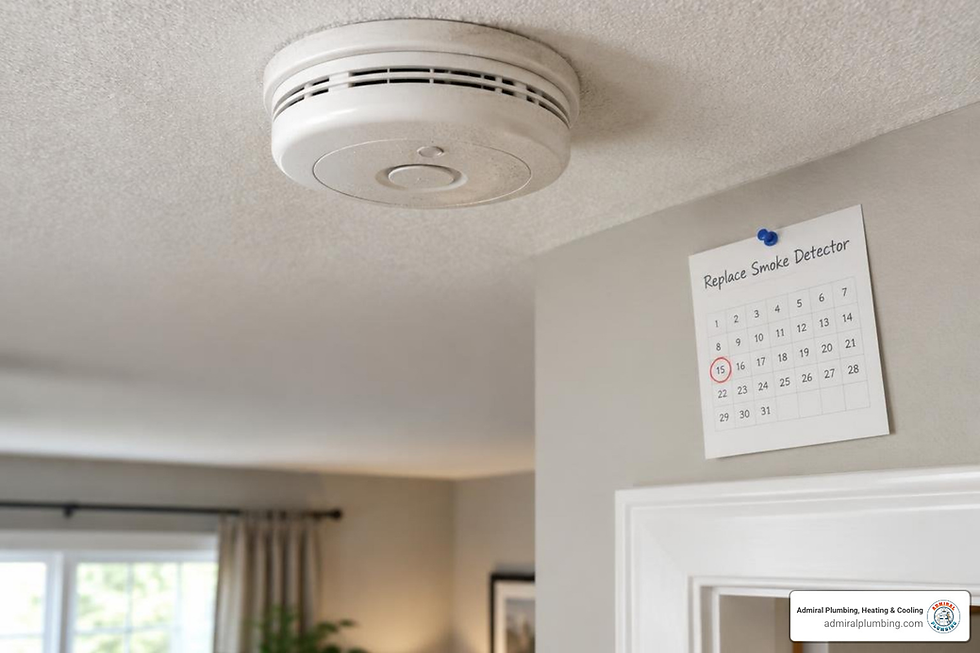
The life expectancy of a smoke detector is 10 years from the date of manufacture, not from when you install it. After a decade, the sensors inside degrade and may fail to detect smoke, putting your household at risk. Almost three out of five home fire deaths happen in homes without working smoke alarms, often because the alarm is too old to function. This guide explains why that 10-year limit exists, how to check your alarm's age, and what to do when it expires. Whether your detector is battery-powered, hardwired, or a combination unit, knowing its true lifespan is the first step toward reliable fire protection. For more on home safety devices, see the National Fire Protection Association's smoke alarm guidance.
Why Smoke Detectors Stop Working After 10 Years
Many homeowners assume that as long as a smoke detector beeps when they press the "test" button, it is functioning properly. In reality, the test button on most units only verifies that the electrical circuit, horn, and battery are operational. It does not test the internal sensing chamber or measure the sensitivity of the chemical and optical components that recognize smoke particles.
Over a ten-year span, continuous exposure to ambient environmental conditions causes natural degradation inside the unit:
Sensor Corrosion and Desensitization: Microscopic airborne contaminants, including dust, grease, pet dander, humidity, and volatile organic compounds (VOCs), accumulate inside the detection chamber. This buildup desensitizes optical components and alters the electrical balance in ionization units.
Component Wear: Electronic resistors, capacitors, and internal wiring degrade from steady exposure to electrical currents, power surges, and routine temperature fluctuations throughout changing seasons.
Increased False Alarms or Delayed Triggering: As sensors deteriorate, units often exhibit either excessive nuisance tripping or, worse, a severe delay in sounding an alarm during an actual smoldering fire.
Corrosion of Electrical Terminals: Even minor atmospheric moisture can cause slight oxidation on the contact pins, battery terminals, and wiring connectors, weakening electrical continuity over time.
Because of this inevitable degradation, industry standards established by the National Fire Protection Association (NFPA) and Underwriters Laboratories (UL) mandate total replacement of all residential smoke alarms every 10 years, regardless of brand, power source, or external condition.
This rule applies universally, whether the unit is a simple battery-operated alarm mounted in a hallway or part of an interconnected hardwired system wired into your home's electrical panel. Even smoke detectors that appear brand new on the outside, with clean casings and no visible wear, can have severely compromised sensors on the inside. The plastic housing does not degrade at the same rate as the sensing components, which is why relying on visual inspection alone is never sufficient to judge whether a detector is still safe to use.
How to Check the Age of Your Smoke Detector
To determine whether your smoke detector is still within its 10-year lifespan, you need to find its manufacture date. Most detectors have a date of manufacture printed on the back or side of the unit. Follow these straightforward steps to check the age of each detector in your home:
Safely Remove the Detector: Twist the alarm counterclockwise to detach it from its mounting bracket on the ceiling or wall. If the alarm is hardwired, disconnect the wiring harness gently without pulling directly on the electrical cables.
Inspect the Back Label: Look for a manufacturing sticker or a stamped date on the rear plastic casing. You will typically see a label marked "Date of Manufacture," "Mfg. Date," or "Replace By."
Calculate the Expiration Date: If the label provides a manufacture date rather than an expiration date, add exactly 10 years to determine when the unit must be decommissioned.
Check for Missing Dates: If you cannot find a date stamped on the casing, the device is almost certainly outdated and manufactured prior to modern labeling regulations. In such cases, replace the unit right away.
If you have recently moved into an existing home and do not know the history or maintenance record of the installed alarms, the safest course of action is to replace every smoke detector across the property. Starting fresh ensures you establish an exact replacement timeline and gives you complete confidence in your family's fire safety.
Types of Smoke Detectors and Their Lifespans
All smoke detectors, regardless of type, have a 10-year lifespan. However, there are different types of smoke detectors, and understanding the differences can help you choose the right replacement for each area of your home.
Ionization Smoke Detectors: These detectors use a small amount of radioactive material (Americium-241) to ionize air molecules between two electrically charged plates, causing a continuous electrical current to flow. When smoke enters the chamber, it disrupts this current, triggering the loud horn. Ionization detectors are generally more responsive to fast-flaming fires that produce small combustion particles, such as paper or kitchen grease fires.
Photoelectric Smoke Detectors: These detectors use a focused light source and a photosensitive sensor positioned at an angle. In clean air, the light beam travels straight ahead without hitting the sensor. When smoke enters the chamber, smoke particles scatter the light beam, deflecting light onto the sensor and triggering the alarm. Photoelectric detectors are especially sensitive to slow, smoldering fires that produce larger smoke particles, such as burning upholstery, bedding, or electrical wiring insulation.
Dual-Sensor Smoke Detectors: These units combine both ionization and photoelectric technologies inside a single housing. By using both sensing mechanisms, dual-sensor alarms provide broad protection against both fast-flaming and slow-smoldering fires.
Combination Smoke and Carbon Monoxide Detectors: These units detect both smoke and carbon monoxide (CO), a colorless, odorless, and toxic gas often generated by malfunctioning fuel-burning appliances. While the smoke detection components generally last up to 10 years, electrochemical carbon monoxide sensors often degrade faster, usually having a functional lifespan of 5 to 7 years depending on the model. Always check the specific manufacturer guidelines stamped on the unit to ensure full protection against both hazards.
Smart and Interconnected Smoke Detectors: Modern smart detectors connect to your home Wi-Fi network and communicate with your mobile devices. They can send emergency notifications directly to your phone when an alarm triggers, even when you are away from home. While they offer advanced diagnostic and remote monitoring capabilities, their internal physical sensors still age at the same rate and must be replaced after 10 years.
Where and How to Install Replacement Smoke Detectors
When replacing expired smoke detectors, proper placement is critical for maximum early warning. Installing alarms in incorrect locations can lead to delayed detection or frequent false alarms from cooking steam and humidity. Follow standard safety recommendations when outfitting your home:
Every Level and Sleeping Area: Install at least one smoke detector on every level of the home, including finished basements and attics. Place an alarm inside every individual bedroom, as well as in the immediate hallway outside sleeping quarters.
Ceiling and Wall Positioning: Mount smoke alarms high on ceilings, at least 4 inches away from any adjacent wall. If ceiling installation is not possible, mount them on the wall between 4 and 12 inches below the ceiling line.
Avoid Dead Air Spaces: Do not install smoke detectors in the peak of pitched or vaulted ceilings where stagnant air pockets can prevent smoke from reaching the sensor.
Keep Clear of Air Currents: Place alarms at least 3 feet away from HVAC supply vents, return grilles, ceiling fans, and drafty windows. Strong airflow can blow smoke away from the detection chamber or introduce excess dust that damages internal components.
Kitchen and Bathroom Distances: Mount alarms at least 10 feet away from cooking appliances and at least 3 feet away from bathroom doors containing showers to minimize nuisance alarms caused by steam.
The Importance of Regular Maintenance
Even though smoke detectors have a 10-year lifespan, they require regular maintenance to function reliably throughout their operational years. Dust, cobwebs, and airborne grease can accumulate inside the sensor chamber over time, leading to unwanted chirping, false alarms, or diminished sensitivity during a real emergency.
To keep your smoke detectors in peak operating condition, establish a consistent routine:
Monthly Testing: Test every alarm once a month by pressing and holding the test button until the alarm sounds clearly. If the unit fails to sound, immediately check and replace the batteries. If a hardwired unit with fresh batteries fails to respond, replace the entire detector immediately.
Routine Cleaning: Clean your smoke alarms every few months using a vacuum cleaner with a soft brush attachment. Gently sweep around the perimeter and openings of the casing to dislodge accumulated dust, cobwebs, and pet hair. Never spray water, chemical cleaners, aerosol disinfectants, or paint onto or near the detector housing, as these substances can permanently contaminate the internal sensors.
Annual Battery Changes: For units powered by standard 9-volt or AA alkaline batteries, replace the batteries at least once every year, or as soon as the detector emits a low-battery chirp. Many homeowners find it convenient to change their alarm batteries when adjusting their clocks for daylight saving time.
Sealed 10-Year Lithium Batteries: Many modern smoke alarms feature built-in, tamper-resistant 10-year lithium batteries. These units do not require annual battery replacements; however, the entire alarm must still be retired and replaced as soon as it reaches its 10-year expiration date or begins its end-of-life chirping sequence.
Upgrading Hardwired and Interconnected Systems
Hardwired smoke alarm systems offer significant safety advantages because they are interconnected. When one detector senses smoke in a remote area—such as a basement or garage—all interconnected alarms throughout the entire house sound simultaneously. This rapid notification gives occupants precious additional seconds to evacuate safely, regardless of where the fire started.
When upgrading or replacing hardwired smoke detectors, keep the following key factors in mind:
Match Compatibility: Smoke alarms from different manufacturers or different product generations may not communicate properly over the shared interconnect wire. When replacing hardwired units, it is best practice to replace all interconnected units at the same time using compatible models.
Ensure Battery Backup: Hardwired alarms must always include battery backup systems (either replaceable alkaline batteries or sealed lithium cells) so they continue to provide uninterrupted protection during a power outage.
Electrical Safety: Always turn off the corresponding electrical circuit breaker at your main service panel before disconnecting or replacing hardwired smoke alarms. If you are uncomfortable working with household electrical wiring, hire a licensed professional to handle the replacement safely.
Conclusion
Understanding the life expectancy of a smoke detector is crucial for maintaining a safe home. All smoke detectors, regardless of type, power source, or external condition, must be replaced every 10 years from the date of manufacture. Take time to inspect the labels on your alarms, test each device, and replace any units that have reached or passed their expiration date. For professional assistance with home safety devices, heating, cooling, and electrical support, Admiral Plumbing, Heating & Cooling is here to help ensure your home remains safe, comfortable, and fully protected.


Comments