
Lights Camera Action: The Ultimate Guide to Sewer Video Inspections

What Is a Sewer Lateral Inspection Near Me — and Do You Need One?
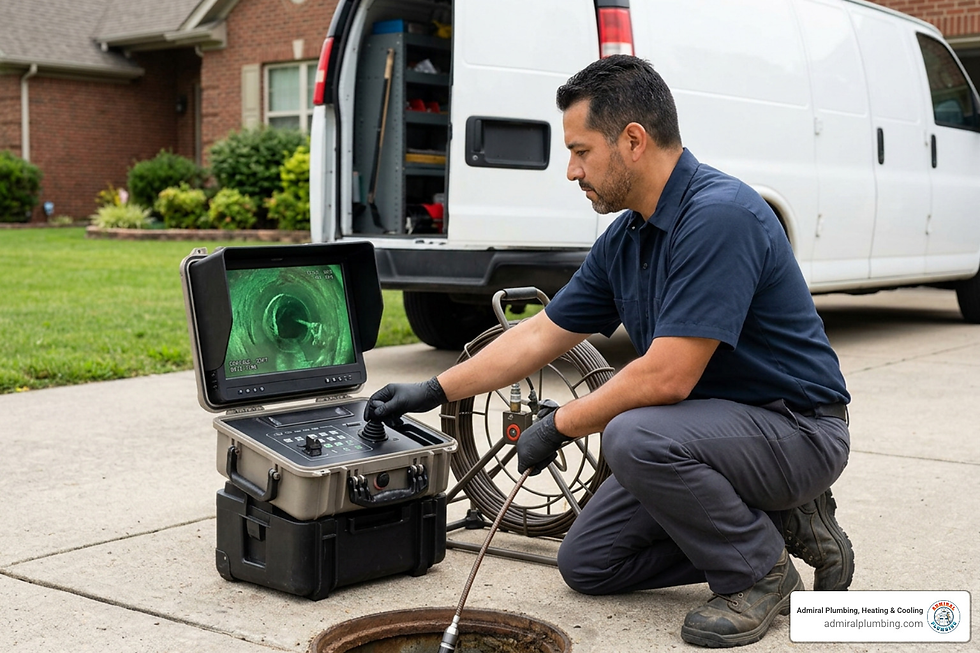
If you need a quick answer, here's what a sewer lateral inspection near me covers:
Question | Quick Answer |
What is it? | A camera is fed into your sewer pipe to check its condition from the inside |
Who needs one? | Homebuyers, homeowners with slow drains or backups, and anyone required by a municipality |
Who owns the pipe? | You do — from your house all the way to the public main in the street |
How much does it cost? | Typically $250–$450 for a residential inspection |
How long does it take? | Usually under an hour for a standard residential lateral |
What can it find? | Cracks, tree root intrusion, offset joints, pipe bellies, and blockages |
One day everything drains just fine. The next, you've got a slow gurgle in the basement or a backup that ruins your afternoon. The problem is almost always underground — invisible, and easy to ignore until it isn't.
That's exactly what a sewer lateral inspection is designed to solve. Instead of guessing, a technician feeds a waterproof, high-definition camera through your sewer pipe and shows you — in real time — exactly what's going on inside. No digging. No guesswork. Just a clear picture of what your pipes look like and what, if anything, needs to be fixed.
Most sewer laterals in older neighborhoods have been in the ground for decades. Pipes age, tree roots grow, and joints shift. A camera inspection is the only way to know for certain whether your line is in good shape or quietly failing beneath your yard.
I'm Adam Wettach, owner of Admiral Plumbing — and after years of diagnosing drain and sewer problems for homeowners across Utah County, I've seen how a single sewer lateral inspection near me can save a homeowner thousands of dollars in surprise repair bills. Let's walk you through everything you need to know.
What is a Sewer Lateral and Who Owns It?
When we talk about your home's plumbing, it is easy to focus on what you can see: the shiny faucets, the porcelain toilets, and the drains in your sinks. But the most critical part of your home’s waste disposal system is entirely hidden from view.
This hidden lifeline is called the sewer lateral.
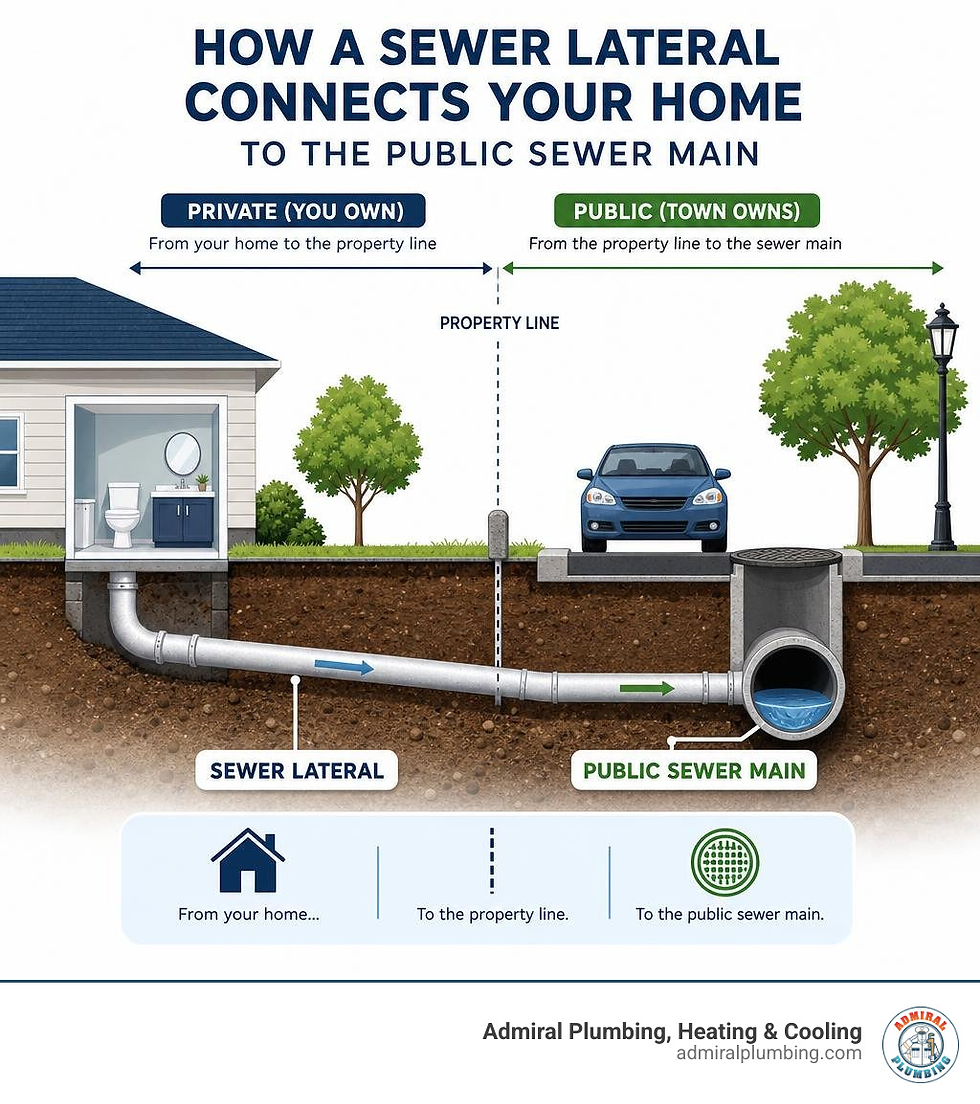
Simply put, the sewer lateral is the underground pipe that carries all the wastewater from your home’s toilets, showers, washing machines, and sinks out to the public sewer main buried under your street (or to your private onsite septic system).

Many homeowners assume that because this pipe runs under public sidewalks and streets, the local city or utility company is responsible for its maintenance. Unfortunately, that is a very common and costly misconception. To help you understand who is on the hook for what, let's break down the differences:
Feature | Private Sewer Lateral (PSL) | Public Sewer Main |
Ownership | Private Property Owner | Local Municipality / Utility District |
Location | From the home, under the yard, to the street connection | Running down the center of the street or easement |
Maintenance & Repair | 100% Homeowner Responsibility | 100% Government/Utility Responsibility |
Common Materials | Clay, Cast Iron, Orangeburg, PVC | Concrete, Large PVC, Ductile Iron |
Vulnerability | High (tree roots, soil shifting, age) | Moderate (monitored and maintained regularly) |
As a property owner, you are financially and legally responsible for the entire length of your private sewer lateral. This responsibility does not stop at your property line. It extends all the way to the physical tap where your line connects to the municipal main in the middle of the street. If a tree root cracks the pipe under your front yard, you pay for it. If the pipe collapses under the public asphalt right before the main connection, you still pay for it.
Understanding this distinction is the first step toward protecting your wallet. To learn more about why keeping tabs on this line is so critical, check out our guide on The Importance of Home Sewer Inspections.
The Difference Between a Drain and a Sewer
To understand how your plumbing system is categorized legally and technically, we have to look at the plumbing code. Under the International Plumbing Code (which governs wastewater systems in Utah and most of the United States), there is a strict distinction between a "drain" and a "sewer."
Drains: These are the pipes located entirely within the interior footprint of your home. Your kitchen sink drain, your shower drain, and the vertical stacks in your walls are all drains.
Sewers: By code definition, a pipe officially transitions from a drain to a "building sewer" exactly 30 inches outside the exterior wall of the building.
Once the waste exits past that 30-inch boundary, it enters the sewer system. This legal distinction matters because different rules, materials, and inspection standards apply once a pipe is classified as a sewer.
Understanding Your Private Sewer Lateral (PSL) Boundaries
Because your Private Sewer Lateral (PSL) spans both your private property and public land, the exact boundaries of your responsibility can occasionally feel muddy.
In almost all Northern Utah municipalities, your liability runs from the house, past your property line, under the parkway and sidewalk, and directly to the point of connection at the municipal main. If any blockages, structural collapses, or leaks occur anywhere along this path, the financial burden of resolving the issue falls squarely on you.
Because repairing a pipe under a public street requires special municipal permits, traffic control, and asphalt restoration, a failure in the public portion of your lateral can quickly escalate into a massive expense. This is why having a sewer lateral inspection near me performed before buying a home or when experiencing chronic drainage issues is one of the smartest preventative steps you can take.
Why Municipalities Mandate a Sewer Lateral Inspection Near Me
You might wonder why local governments care so much about private pipes. Is there a secret plot to generate work for local plumbers? Not at all. The reality comes down to environmental protection, infrastructure costs, and strict federal regulations.
Municipalities are under immense pressure from the Environmental Protection Agency (EPA) and clean water laws to manage their wastewater treatment systems efficiently. When private sewer lines leak, they don't just let sewage out; they also let clean water in. This process is known in the industry as Inflow and Infiltration (I&I).

According to EPA estimates, at least 50% of all inflow and infiltration originates from private properties. When millions of gallons of clean water leak into sanitary sewers, it overwhelms municipal treatment plants, spikes utility costs, and can cause hazardous raw sewage overflows into local waterways. To combat this, cities across the country are passing strict ordinances requiring homeowners to get a Sewer Inspection and keep their laterals watertight.
The Environmental Impact of Inflow and Infiltration (I&I)
To understand why I&I is such a massive headache for cities, let's look at how it happens:
Inflow: This is clean stormwater that is intentionally or mistakenly piped directly into the sanitary sewer system. Common culprits include residential sump pumps, roof downspouts, and driveway drains illegally connected to the sewer line instead of the storm drain.
Infiltration: This is groundwater that accidentally seeps into sewer pipes through structural defects like cracks, loose joints, or broken cleanouts.
When it rains, groundwater rises. If your lateral is full of cracks, it acts like a sponge, sucking in water from the surrounding soil.
How big is this problem? Wastewater studies across various regional districts have shown that up to one-third of all water received at municipal treatment plants is actually clear rain and groundwater, not sewage! Treating millions of gallons of clean water is incredibly expensive, and the taxpayers ultimately foot the bill. Even worse, during heavy storms, this excess volume can cause treatment plants to fail, leading to environmental disasters.
Real Estate Transfer and Point-of-Sale Mandates
To force property owners to address these failing pipes, an increasing number of municipalities nationwide have implemented mandatory point-of-sale lateral inspection programs. Under these rules, before a property transfer can be finalized, the seller must hire a licensed plumber to perform a certified video inspection of the lateral.
If the lateral fails the inspection (due to cracks, major root intrusion, or sagging), the line must be repaired or replaced before a permanent Use and Occupancy permit is issued. While Northern Utah cities have historically been more relaxed than some coastal regions regarding mandatory point-of-sale lateral certifications, local awareness is shifting. Smart buyers and real estate agents in Utah County now write sewer scope contingencies into almost every standard real estate contract to protect themselves from inheriting a multi-thousand-dollar plumbing nightmare.
How Sewer Camera Technology Works
Gone are the days when diagnosing an underground pipe issue required digging up your entire yard just to find a single clog. Modern plumbing diagnostics rely on state-of-the-art video inspection technology that allows us to see inside your pipes with absolute precision.

To perform a high-quality Main Sewer Camera Inspection, we use specialized equipment designed to withstand the dark, wet, and harsh environment inside a sewer line:
HDR Waterproof Cameras: High-Dynamic-Range (HDR) cameras capture crystal-clear, high-definition video footage, adjusting automatically to the dark and reflective interior of the pipe.
Ultra-Bright LED Lighting: The camera head is ringed with powerful LED lights to illuminate every crack, joint, and obstruction.
Fiberglass Push Rods: The camera is mounted on a long, stiff-yet-flexible fiberglass cable. This push rod must have the perfect balance of stiffness (to push through long runs and navigate bends) and flexibility (to avoid getting stuck).
Sonde Transmitters: Built directly into the camera head is a small radio transmitter called a sonde. As the camera travels through your pipe, it continuously emits a signal.
Ground Receivers: On the surface, the technician uses a handheld locator wand that picks up the sonde's signal, allowing us to pinpoint the exact location and depth of the camera head underground.
Navigating the Pipe with High-Definition Scopes
Sewer cameras are not one-size-fits-all. Professional diagnostic fleets carry cameras of various sizes to navigate pipes ranging from 2 inches up to 36 inches in diameter.
During a typical residential inspection, the camera is inserted through an easily accessible cleanout (an outdoor pipe that connects directly to your main lateral). As we push the camera forward, the live video feed is transmitted in real time to a high-contrast monitor. We watch the screen closely, analyzing the pipe's interior wall, checking the integrity of every joint, and looking for any signs of structural deterioration.
Locating and Mapping Underground Pipe Defects
One of the greatest advantages of modern sewer camera technology is its mapping capability. If the camera encounters a collapsed section of pipe or a massive root ball, we don't have to guess where it is in your yard.
By activating the sonde transmitter inside the camera head, our technician can walk above ground with a locator wand. The wand guides us directly to the spot where the camera has stopped. We can mark the exact patch of grass and determine the precise depth of the pipe (whether it's 3 feet deep or 10 feet deep). This allows us to plan target repairs, saving your landscaping, driveways, and sidewalks from unnecessary excavation.
What a Sewer Camera Inspection Reveals
When we slide a camera down your lateral, we aren't just looking for clogs. We are conducting a comprehensive structural health check of your underground piping. Over time, pipes (much like people) accumulate physical deficiencies.

Depending on when your home was built, your lateral could be made of clay, cast iron, PVC, or even Orangeburg (a historical bit of pipe made of tar-paper that has a habit of flattening like a wet straw over time). A professional camera inspection will reveal exactly what material your pipe is made of and what issues are threatening its lifespan. For a deeper look at what to watch out for, read our post on the Top 5 Signs Your Sewer Line Needs Repair.
Identifying Pipe Defects with a Sewer Lateral Inspection Near Me
A comprehensive sewer lateral inspection near me is designed to catch several common structural defects before they cause a catastrophic backup:
Cracks and Fractures: Hairline cracks can quickly grow under the pressure of shifting soil and freezing winter temperatures, eventually leading to a complete pipe collapse.
Offset Joints: Older clay and concrete pipes were installed in short sections. Over time, the earth shifts, causing the joints to misalign (offset). This creates a lip that catches solid waste and allows roots to enter.
Tree Root Intrusion: Tree roots are highly sensitive to moisture. Even the tiniest crack in a sewer joint releases warm, nutrient-rich water vapor. Roots will find that crack, force their way in, and grow into massive root balls that completely block the pipe.
Pipe Bellies (Sags): If the soil beneath a pipe settles or was poorly compacted during installation, a section of the pipe can sink. This creates a "belly" or sag that holds standing water and collects debris, leading to chronic clogs.
Corrosion and Scale: Cast iron pipes are prone to rusting and scaling over time. The interior walls become rough and jagged, catching toilet paper and waste.
The Problem with Historic House Traps and Curb Traps
If you live in an older historic home, your plumbing system might still feature a house trap or a curb trap. These are U-shaped bends in the sewer line, usually buried near the basement wall or close to the property line.
Historically, these traps were installed to keep sewer gases from traveling back up the pipe and into the home. However, modern plumbing codes (including Utah's statewide codes) have largely phased them out.
Why? Because house traps are notorious maintenance nightmares. They restrict flow, catch debris, make snaking incredibly difficult, and frequently cause severe backups. Furthermore, they prevent modern sewer cameras from navigating past them. During an inspection, if we encounter an old house trap, we often recommend having it removed and replaced with a standard, double-sweep cleanout to bring your system up to modern standards.
Preparing for and Executing the Inspection
Getting your sewer line inspected is a straightforward process, but it does require some basic preparation to ensure we get an accurate diagnosis. The most critical factor is having an accessible entry point, typically an outdoor cleanout pipe.
If your home doesn’t have an outdoor cleanout, we can sometimes access the lateral by removing a toilet or going through a roof vent stack. However, these alternative methods are more labor-intensive and messy. If your line lacks a cleanout, installing one is a highly recommended upgrade that will lower your ongoing maintenance costs and make future service much easier.
Can You Inspect a Fully Clogged Sewer Line?
One of the most common questions we get is: "Can you run a camera down my line if it's currently backed up?"
The short answer is no. If your sewer line is completely clogged and filled with standing, dirty water, a camera will be entirely useless. It’s like trying to drive a car through a thick fog with your high beams on; the camera lens will just see black or brown murky water, making it impossible to inspect the pipe walls or identify structural defects.
To get a true picture of your pipe's condition, the line must be cleared first. We typically recommend using a professional drain snake or hydro jetting to restore flow before running the camera. By combining Main Sewer Cleaning Hydro Jetting with a follow-up camera inspection, we can clear out years of grease, scale, and roots, allowing us to inspect the clean, bare pipe walls for any underlying damage.
What to Expect During a Sewer Lateral Inspection Near Me
When you schedule a sewer lateral inspection near me with us, here is how the process unfolds:
Setup: Our technician locates your sewer cleanout, lays down protective mats to keep the area clean, and prepares the camera equipment.
Insertion: We gently feed the camera head into the cleanout and begin pushing it down the lateral toward the street main.
Real-Time Viewing: You can stand right next to our technician and watch the live monitor feed as the camera travels. We will point out any joints, roots, sags, or cracks we find.
Locating (if needed): If we find a major defect, we will use our locator wand to mark the spot on the ground above.
Reporting: A standard residential inspection takes about 10 to 15 minutes of actual camera time. Once completed, we provide you with a detailed written report, a clear explanation of our findings, and a digital link to the recorded video file for your records.
Frequently Asked Questions about Sewer Inspections
Sewer issues can be stressful and confusing. To help you make informed decisions, we’ve compiled answers to some of the most common questions homeowners ask about sewer lateral inspections and Sewer Repair.
How much does a sewer lateral inspection cost?
On average, a professional residential sewer lateral camera inspection costs between $250 and $450.
The exact price depends on several factors, including:
Accessibility: Is there an easily accessible outdoor cleanout, or do we need to pull a toilet?
Line Condition: Is the pipe clear, or does it require snaking or hydro jetting first to remove standing water?
Length of the Pipe: Standard residential laterals are typically 50 to 100 feet long, but longer estate lines may require specialized long-reach cameras.
While $300 might seem like an unwelcome expense, compare it to the cost of a full sewer line replacement, which can easily run between $8,000 and $15,000. Spending a few hundred dollars to catch a minor issue early is one of the best financial investments you can make for your home.
Who pays for repairs if defects are found?
If a sewer lateral inspection reveals major structural failures, who pays for the repairs depends entirely on your situation:
For Current Homeowners: Since you own the private lateral all the way to the street main, the financial responsibility is entirely yours. However, checking your homeowners insurance policy is always smart; some insurers offer optional "Service Line Coverage" riders that can help pay for buried pipe repairs.
During a Home Purchase: If you are buying a home and your pre-purchase sewer scope reveals a cracked or collapsed pipe, this is a major negotiation point. You can ask the seller to repair the line before closing, request a financial credit to cover the repair costs after you move in, or walk away from the deal entirely.
For more information on navigating these scenarios, you can read this guide on Sewer Line Inspection Services in Kansas City, MO | HomeRun Certified Inspections.
How long is a passing sewer lateral inspection valid?
Under most municipal guidelines and standard real estate practices, a passing sewer lateral inspection is considered valid for up to two years.
Because soil shifts, tree roots grow, and pipes age, a clean bill of health doesn't last forever. If you are buying a home and the seller provides a sewer scope video that is more than two years old, it is highly recommended to have a fresh inspection performed to ensure no new issues have developed in the meantime.
Conclusion
Your underground sewer lateral is the unsung hero of your home’s plumbing system. It works quietly day and night to keep your household clean, sanitary, and comfortable. But because it is buried deep underground, it is easy to forget about until a major backup forces its way into your basement.
Don't wait for a plumbing emergency to find out what condition your pipes are in. Whether you are buying a new home in Provo, dealing with chronic slow drains, or simply want the peace of mind that comes with knowing your home's infrastructure is sound, a professional sewer lateral inspection near me is the fastest, cleanest, and most affordable way to get the facts.
At Admiral Plumbing, Heating & Cooling, we have been serving homeowners across Northern Utah with honesty, integrity, and technical excellence. With our A+ BBB rating, state-of-the-art diagnostic equipment, and 24/7 emergency service, you can trust us to deliver clear, unbiased results without any pushy sales tactics.
Ready to see what's really going on beneath your lawn? Contact us today to schedule your comprehensive Sewer Services and let us help you protect your home’s most important utility line!


Comments